Crawlability
Pages, status codes, robots and indexability.
Status code→Robots→Indexability

DeepSpider.ai is the evidence-first SEO audit platform. 227 SEO checks and built-in AI search readiness checks run in the cloud across your whole website, and every finding shows exactly where it was found, with a researched fix. No guesswork. No false passes.
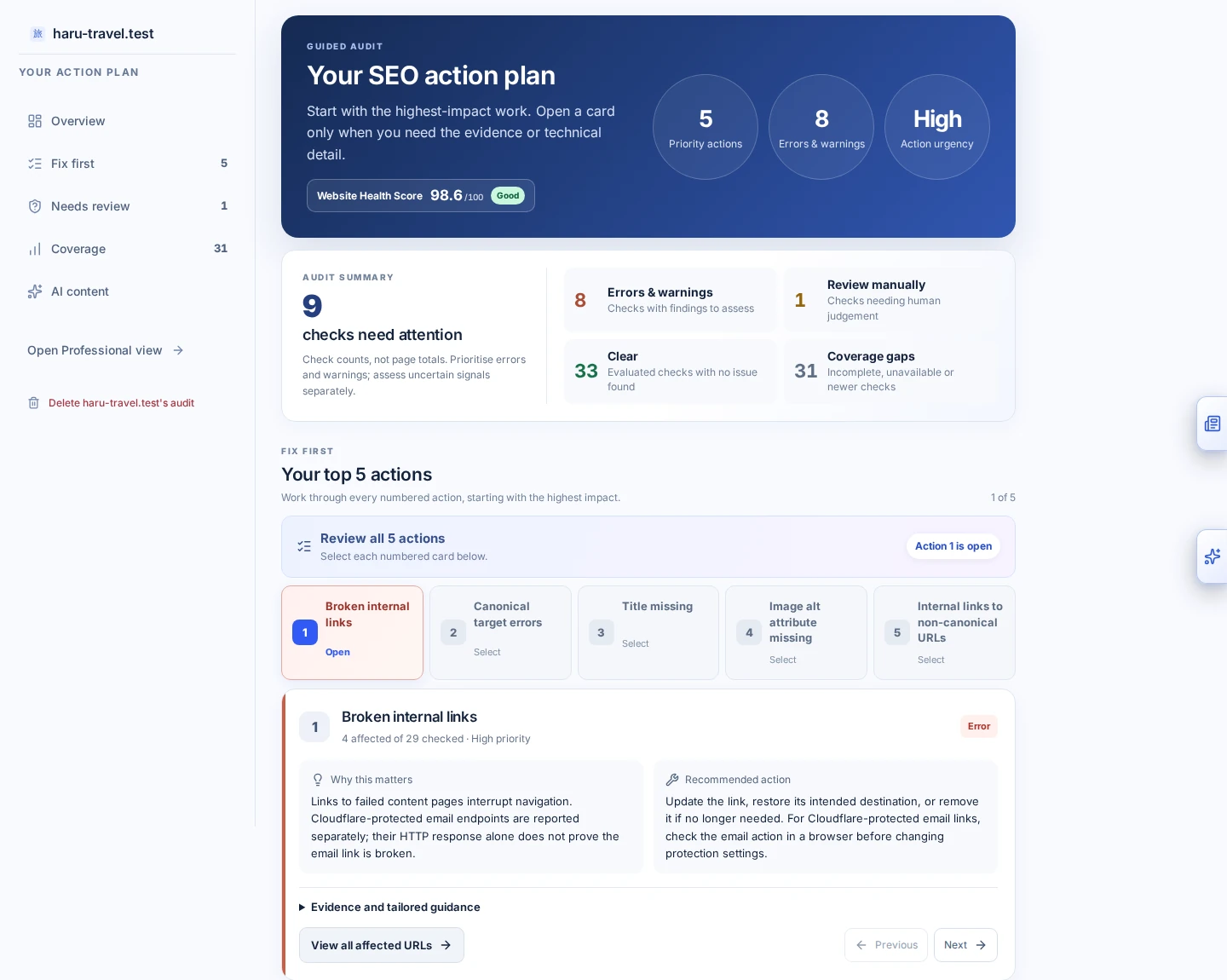
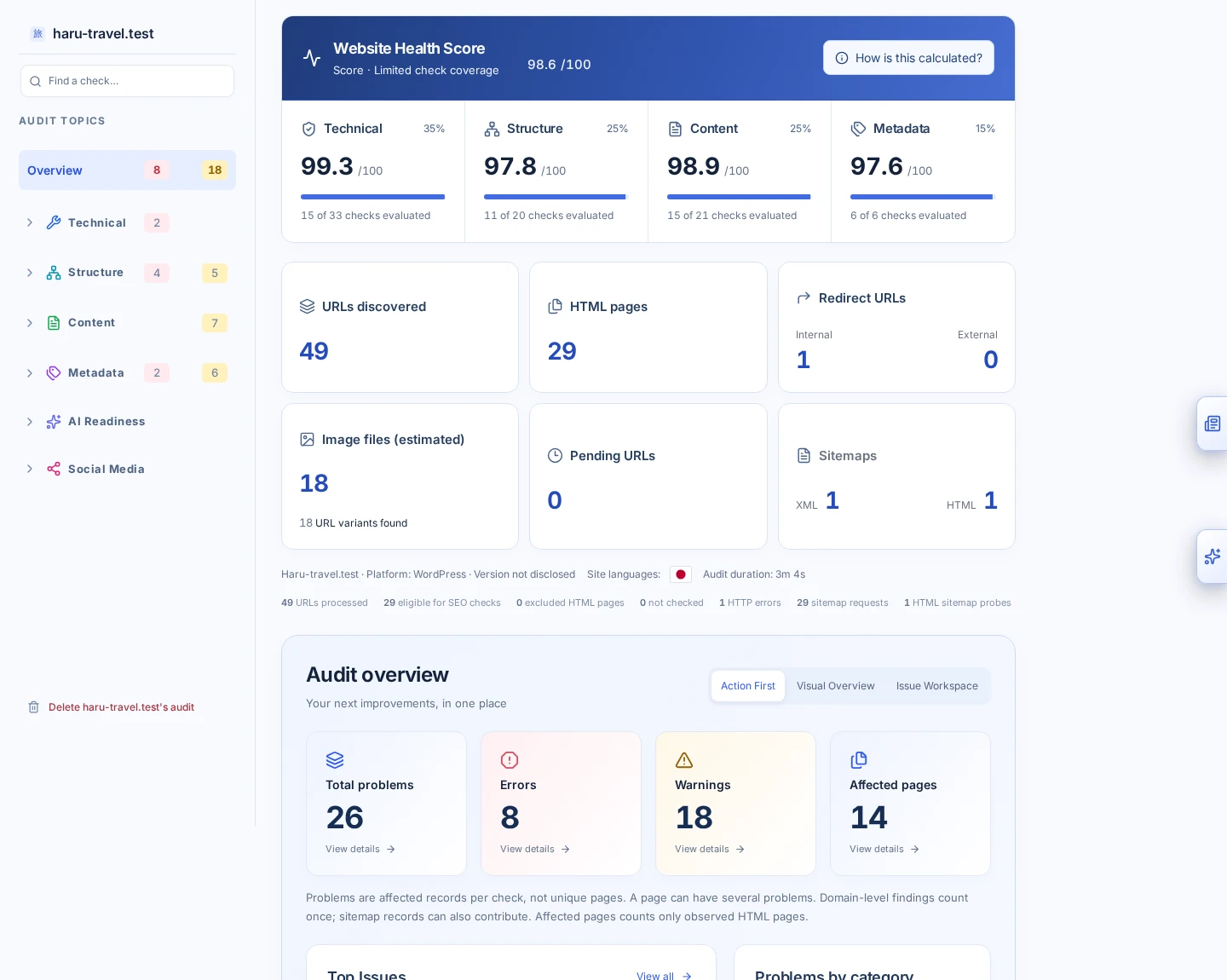
DeepSpider follows the relationships between pages, links, content and technical signals — so an issue is never just a number in a list.
Pages, status codes, robots and indexability.
Internal links, redirects, canonicals and URL structure.
Page content, headings, uniqueness and thin content.
Structured, accessible signals for AI-driven discovery.
Titles, descriptions and page-level signals.
Alt text, references, format and file checks.
Structured data, validity, coverage and source evidence.
Page weight, resources and supported performance signals.
Across technical SEO, site structure, content, schema, accessibility, images, AI readiness and website performance.
Real websites we studied to make DeepSpider better.
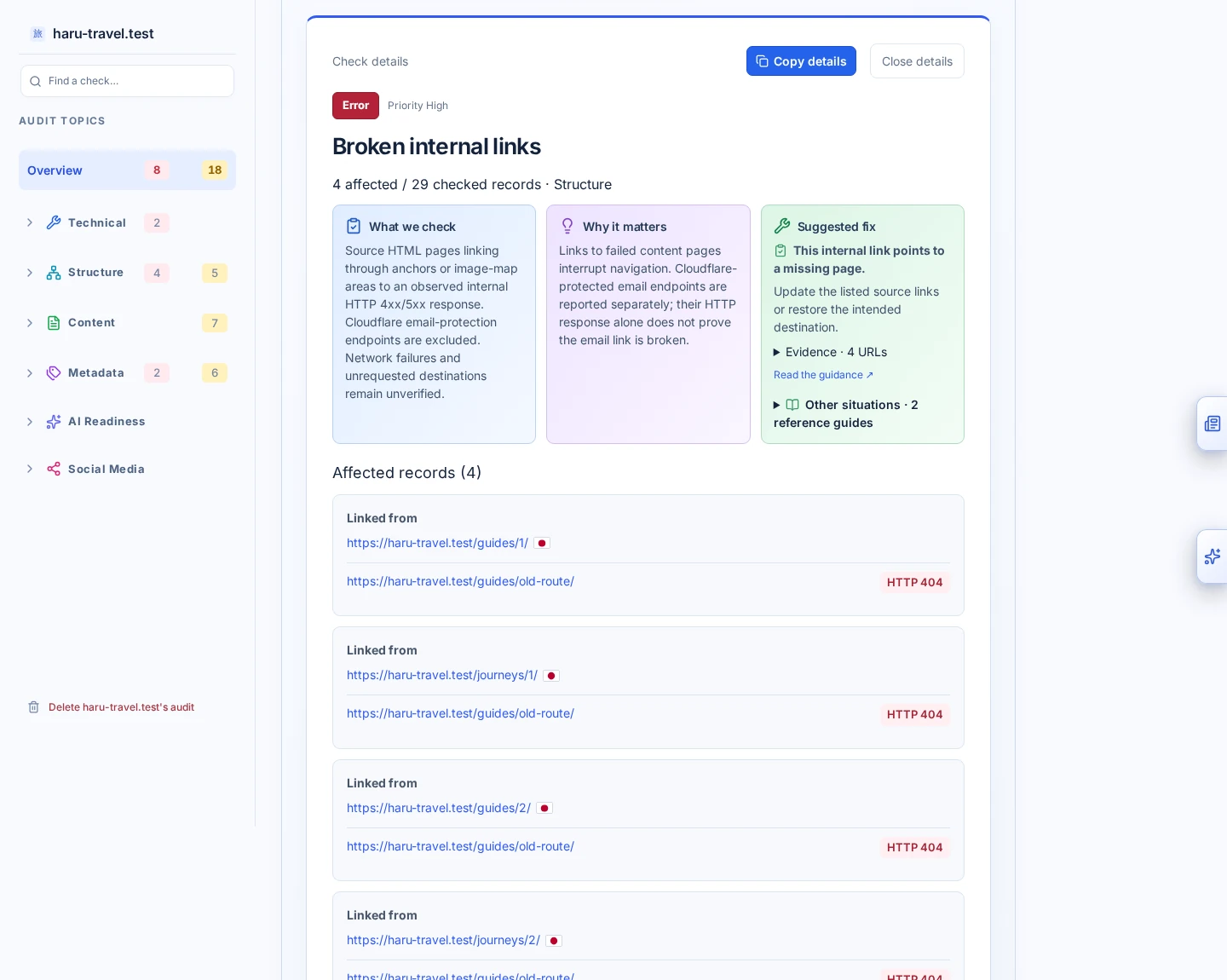
Most SEO tools stop at the issue. DeepSpider explains each finding, shows what to verify and gives researched fix guidance, so you can move from problem to solution without leaving the audit.
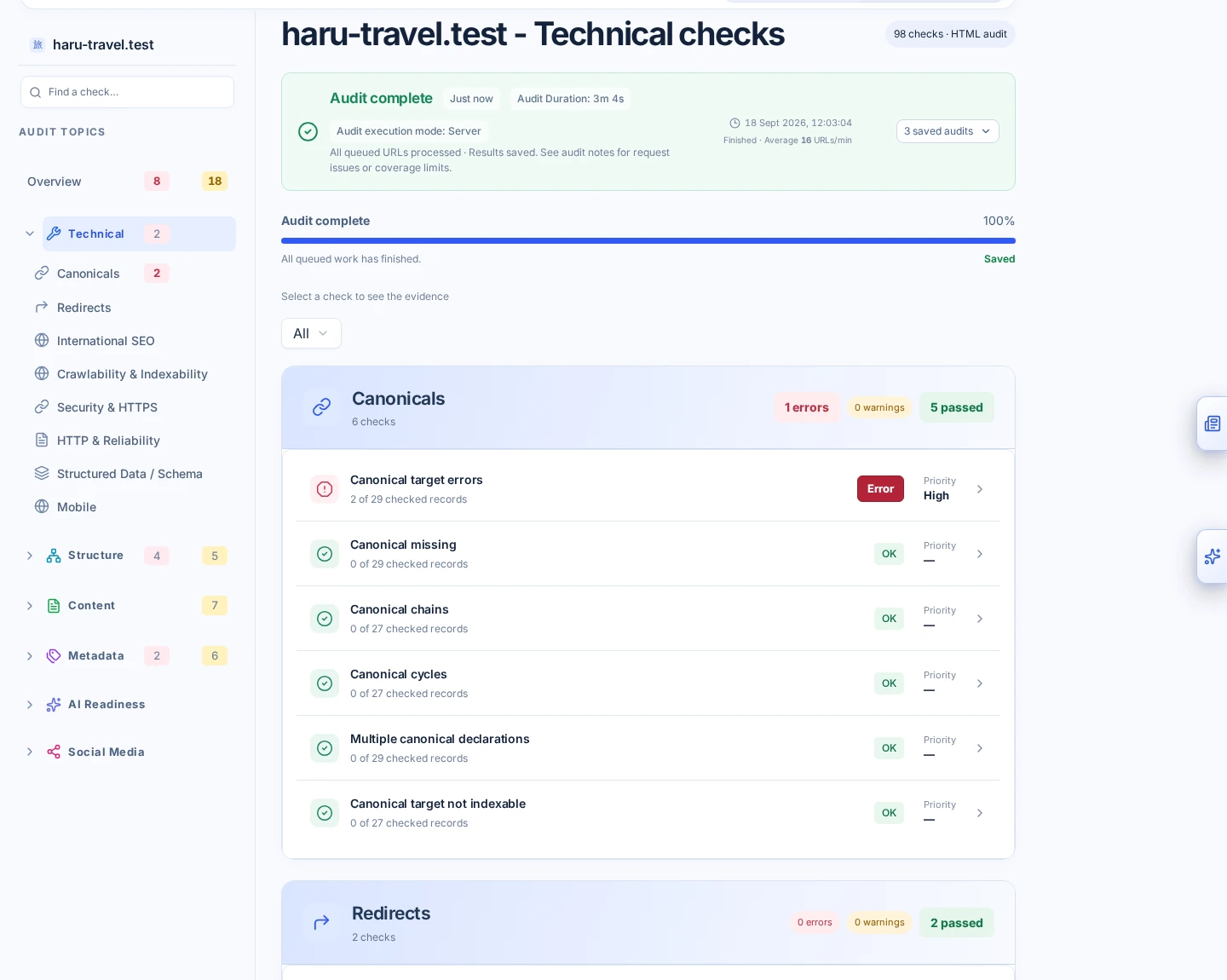
Review robots.txt, XML sitemaps, canonical signals and access limitations. Keep a missing signal separate from a confirmed problem.
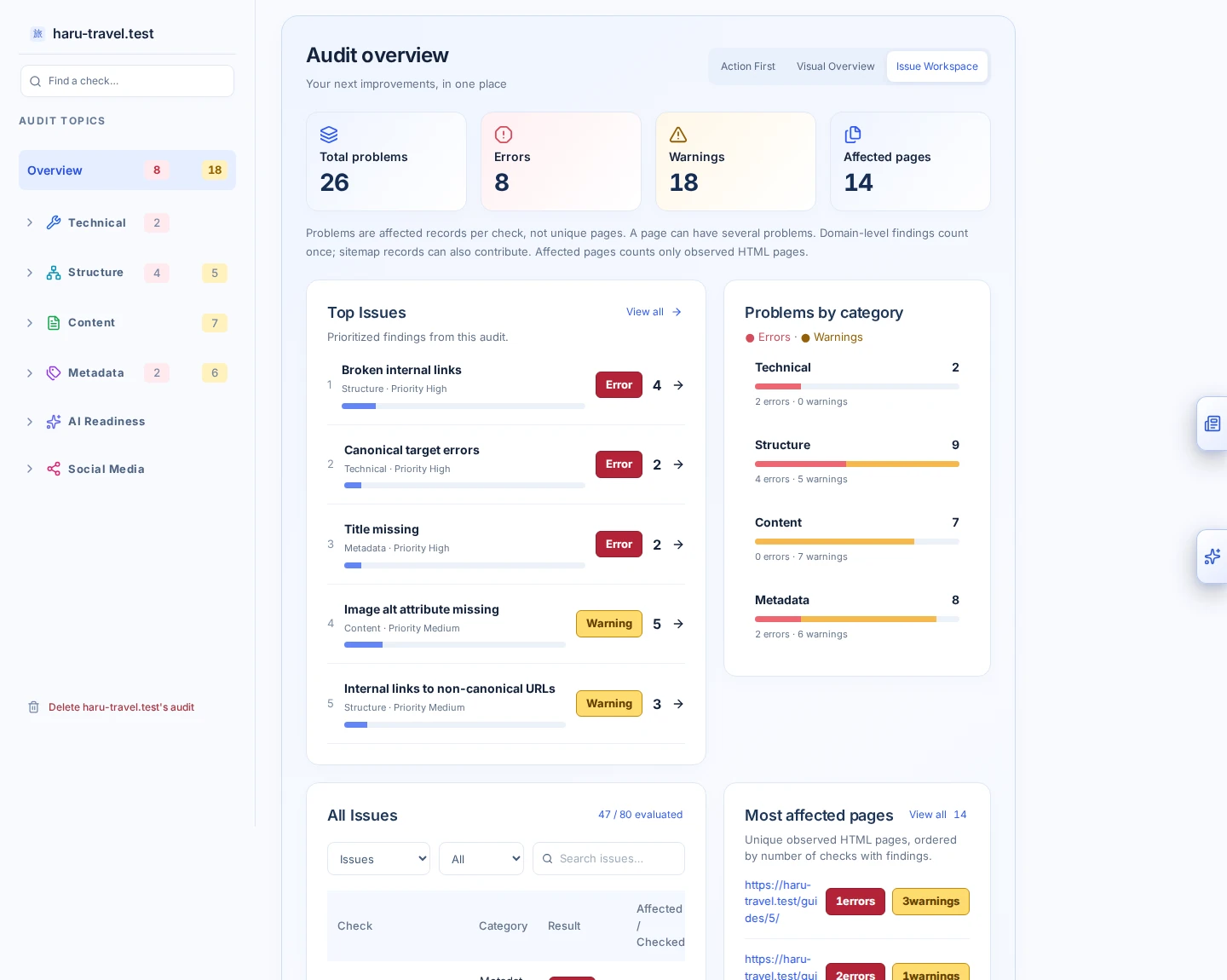
Look closerInspect internal links, broken destinations and redirects with the source pages that need attention.
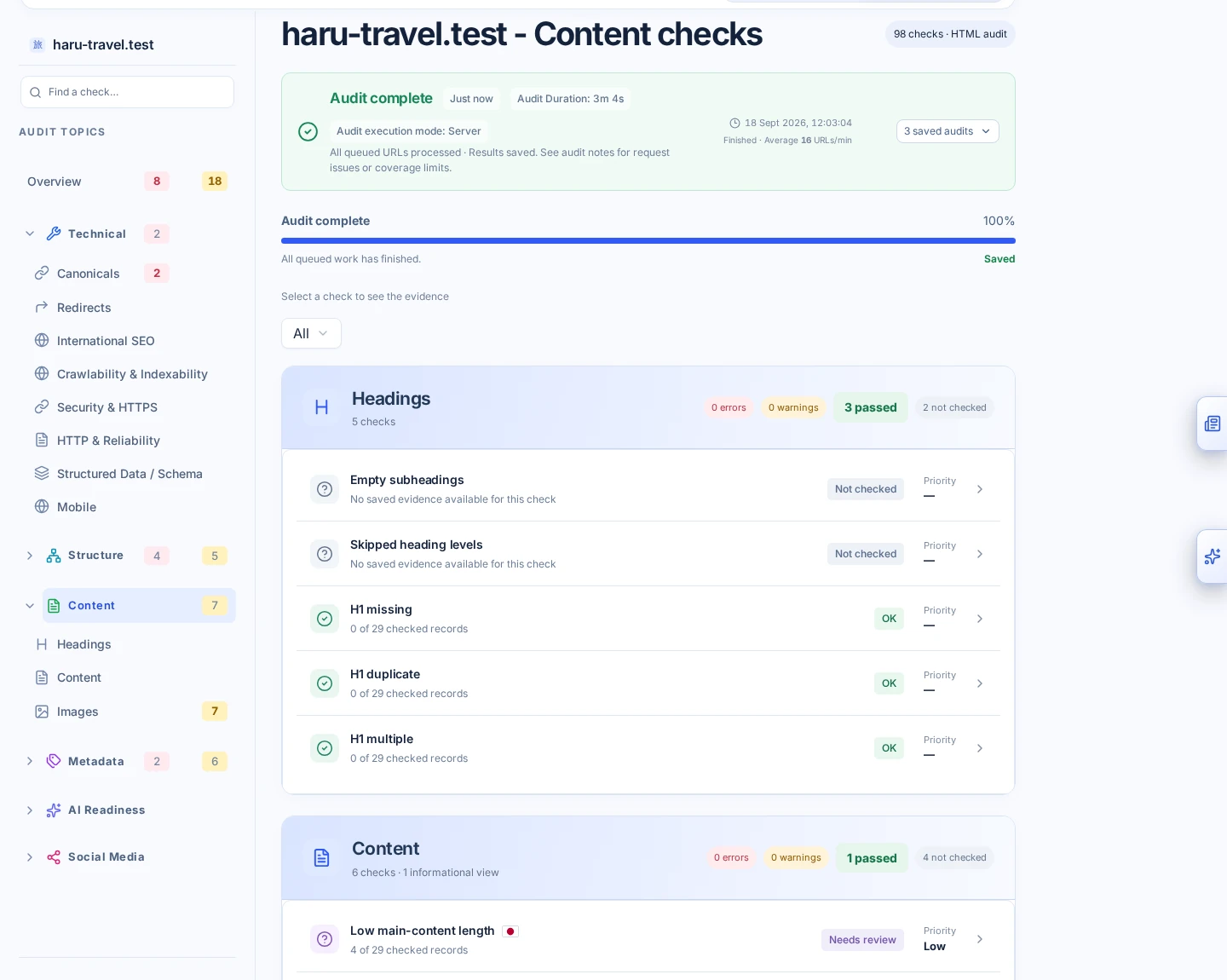
Look closerReview repeated content, main-content length and changes between saved audits. Keep editorial judgement in the loop.
Look closerFind missing or repeated titles and descriptions, with the affected pages and source evidence beside the finding.
Look closerReview missing alt text, image references and supported file-size and dimension checks. Access gaps stay visible.
Look closerInspect source structured data, canonical and hreflang signals, with language-aware content handling, including Japanese.
Look closer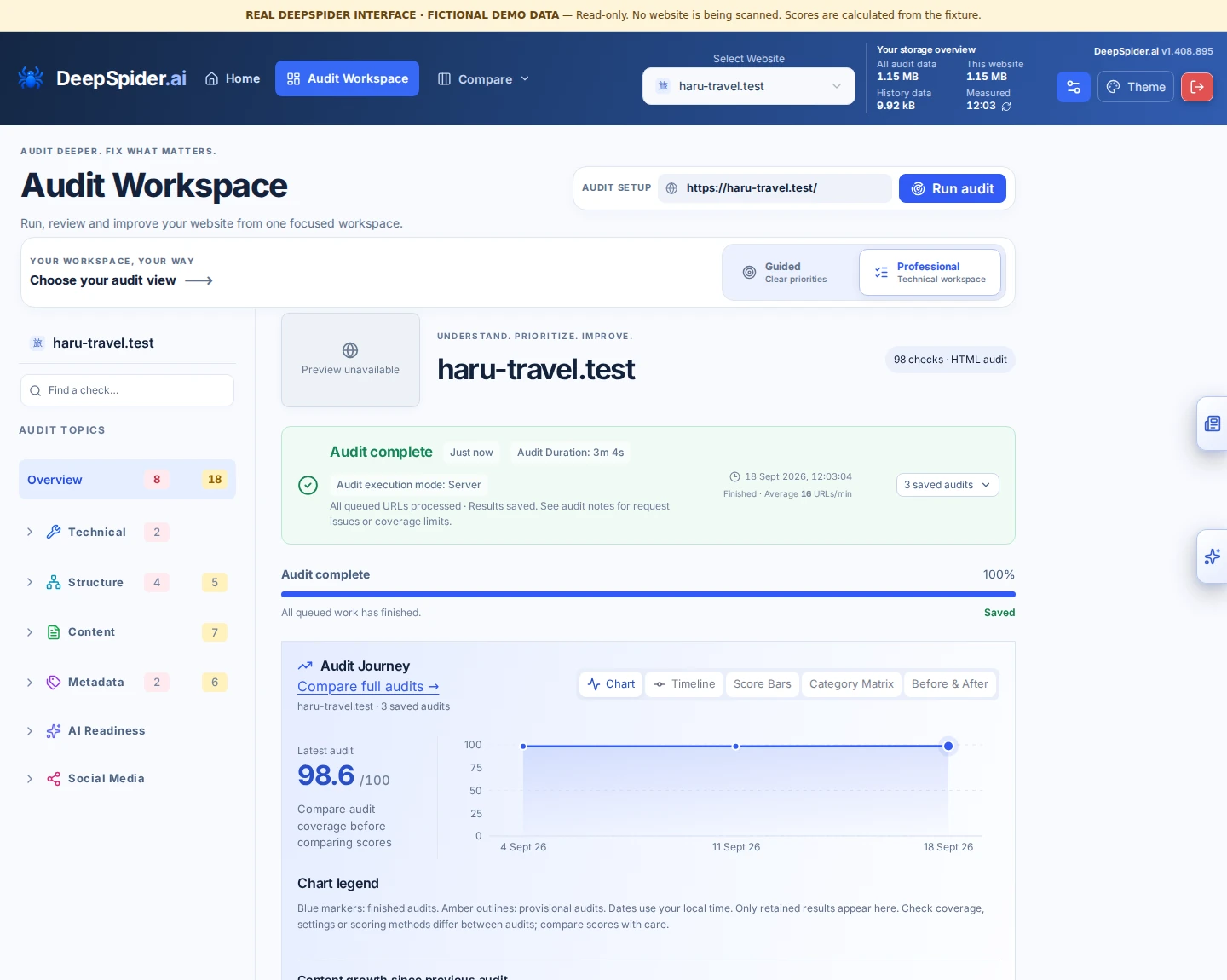
Fixed a few things last week? Run a fresh audit and put it next to any earlier one. DeepSpider shows the before and after side by side, check by check, so you can see what really improved and what still needs work, instead of guessing from a single score.
DeepSpider looks where others don't. Beyond the usual titles and broken links, it checks the details that quietly cost you visibility: redirects in your sitemap, conflicting canonical signals, broken breadcrumb trails, hidden crawl barriers, pages accidentally blocked from indexing, oversized images and mismatched structured data. These are things you won't spot by browsing your site and most tools don't look for. Every finding shows exactly where it is and how to fix it, so you know exactly what to change, and why.
No. DeepSpider runs in your browser, and audits run on our servers. You can close the tab and come back to the results later.
Guided shows your top priorities in plain language, so you know what to fix first. Professional shows every check, affected URL and piece of evidence for deeper analysis. Both use the same audit.
Plans start at €29 per month for 3 websites and 5,000 HTML pages per audit. Annual billing gives you two months free. See all plans and limits on the Plans page.
Depending on your plan, up to 5,000, 25,000, 100,000 or 250,000 working HTML pages per audit. Redirects, broken links and images are checked on top and do not use this allowance, up to a safety limit of twice the allowance in page URLs (for example 10,000 on Starter). Image checks: up to 50,000 per audit on Starter and 150,000 on the other plans. Large websites can take several hours to audit. Smaller sites can also be slow if they limit bot traffic, because DeepSpider respects those limits instead of pushing harder. Need more pages? Contact us about a custom package.
Your audits are private to your account. Only you can see and manage them. Audits run on servers in the EU (Frankfurt), and DeepSpider only reads publicly accessible pages of the websites you audit.
Yes. DeepSpider can render JavaScript, so content that only appears after scripts run can be included in the audit.
DeepSpider adjusts its speed to how your server responds. It slows down or pauses automatically when a site returns errors or rate limits, and it honours robots.txt Crawl-delay.
Explore the sample. See what you would investigate first.